What Is a Dual Trigger?
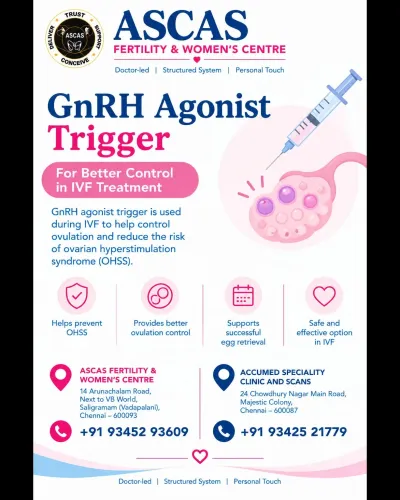
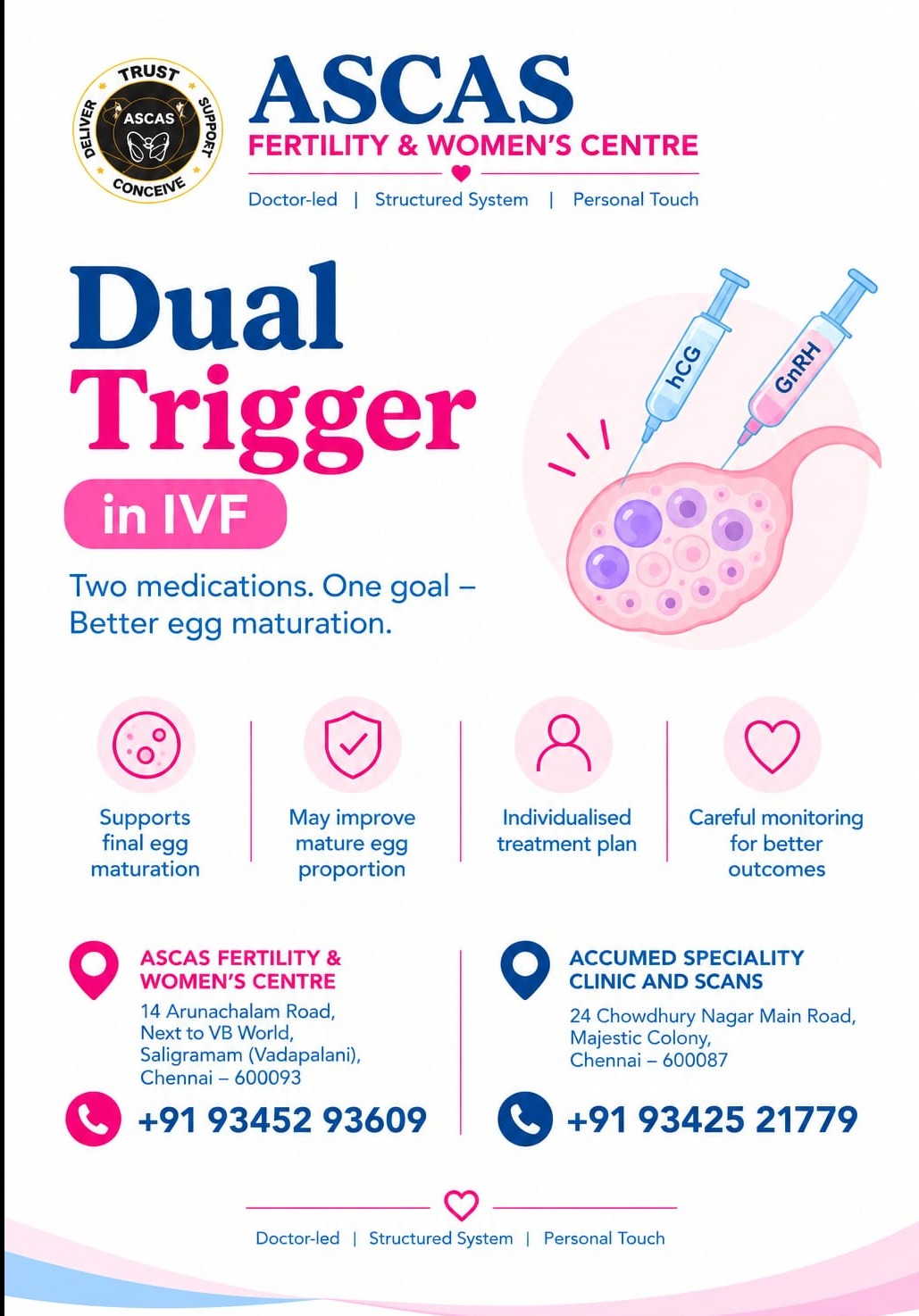
A dual trigger is a technique used in selected IVF cycles to support the final maturation of eggs before egg retrieval. It combines two medications: human chorionic gonadotropin (hCG) and a gonadotropin-releasing hormone (GnRH) agonist.
These medications act through different mechanisms to stimulate the final stages of egg maturation. The fertility specialist decides whether a dual trigger is appropriate based on the patient's ovarian response, hormone levels and treatment plan.
How Does a Dual Trigger Work?
During IVF, ovarian stimulation medications encourage multiple follicles to develop. Once the follicles reach an appropriate stage, the trigger medication is administered to prepare the eggs for retrieval.
The process generally involves:
*Ovarian stimulation: Medications support the development of multiple follicles.
*Follicular monitoring: Ultrasound scans and hormone tests help assess the ovarian response.
*Dual trigger administration: hCG and a GnRH agonist are given according to the prescribed protocol.
*Egg retrieval: The eggs are collected at the planned time, commonly around 34–36 hours after the trigger, depending on the clinic's protocol.
Why Is a Dual Trigger Used?
A fertility specialist may consider a dual trigger to:
*Support final egg maturation before retrieval.
*Potentially improve the proportion of mature eggs in selected patients.
*Individualise treatment for patients with a previous suboptimal egg-maturation response.
*Help plan IVF treatment according to the patient's ovarian response.
Important: A dual trigger is not necessary for every IVF cycle. Its benefits vary between patients, and it does not guarantee fertilisation, embryo development, pregnancy or live birth.
Who May Benefit from a Dual Trigger?
Depending on the clinical assessment, a dual trigger may be considered for selected patients who have:
*A previous cycle with a lower-than-expected proportion of mature eggs.
*Certain patterns of suboptimal response to a conventional trigger.
*Specific clinical circumstances in which the fertility specialist believes a dual trigger may be beneficial.
*The decision should be individualised. Because hCG can increase the risk of ovarian hyperstimulation syndrome (OHSS), the specialist must carefully assess the patient's risk before choosing the trigger protocol.
The Role of Your Fertility Specialist
At ASCAS Fertility & Women’s Centre, IVF treatment is planned according to each patient's individual needs, ovarian response and clinical history.
Dr. Aishwarya Parthasarathy
Consultant Fertility Specialist & Gynaecologist
The fertility specialist evaluates follicular development, reviews previous IVF outcomes when relevant, selects the appropriate trigger protocol and plans the timing of egg retrieval. The clinical team provides monitoring, medication guidance and support throughout the treatment cycle.
Frequently Asked Questions
1. Is a dual trigger better than a single trigger?
Not necessarily. A dual trigger may be useful in selected situations, but the most appropriate approach depends on the patient's clinical profile and treatment goals.
2. Does a dual trigger increase the number of mature eggs?
It may improve the proportion of mature eggs in some selected patients. The response varies, and improvement is not guaranteed.
3. Does a dual trigger prevent OHSS?
No. A dual trigger containing hCG does not eliminate OHSS risk and may increase that risk in some patients. Appropriate risk assessment and monitoring are essential.
4. When is egg retrieval performed after a dual trigger?
Egg retrieval is commonly planned around 34–36 hours after the trigger, according to the clinic's protocol and the patient's treatment plan.
Consult Our Fertility Team
ASCAS Fertility & Women’s Centre
📍 Address: 14 Arunachalam Road, Next to VB World, Saligramam (Vadapalani), Chennai – 600093
📞 Contact: +91 93452 93609
Accumed Speciality Clinic & Scans
📍 Address: 24 Chowdhury Nagar Main Road, Majestic Colony, Chennai – 600087
📞 Contact: +91 93425 21779
ASCAS Fertility & Women’s Centre
Doctor-led • Structured System • Personal Touch
Keywords